








Tarah Kayne and Danny O’Shea became one of the most recognizable American pairs in figure skating during the 2010s, building a partnership defined by technical ambition, persistence and an ability to remain competitive through difficult seasons. Their story was never simply about medals. Instead, it reflected the demanding nature of pairs skating, where trust, timing and physical awareness have to become almost instinctive. Over nearly nine years together, Kayne and O’Shea developed from promising young competitors into U.S. champions and Four Continents champions, leaving behind a career that remains significant within American skating history.
From Training Partners to a Formidable Pair
The foundation of the partnership was established in the early 2010s, when Kayne and O’Shea began skating together after other potential partnerships had failed to produce the right chemistry. Their competitive journey soon demonstrated why pairs skating requires a particular kind of compatibility. Unlike individual skating, success depends on two athletes developing a shared rhythm across jumps, spins, lifts and transitions.
Their progress was gradual rather than instant. At the 2013 U.S. Championships, they finished seventh in their first senior appearance, but the result represented an important starting point. Internationally, they quickly showed promise as well. By the 2013–14 season, they had won medals at several events and earned a silver medal at the Four Continents Championships. That early progress suggested that their partnership had the technical foundation to develop into something much larger.
The People Behind the Partnership
| Skater | Background | Major achievement with the partnership |
|---|---|---|
| Tarah Kayne | American pairs skater from Fort Myers, Florida; began skating in 1998 | 2016 U.S. champion and 2018 Four Continents champion |
| Danny O’Shea | American pairs skater from Pontiac, Michigan | 2016 U.S. champion and 2018 Four Continents champion |
| Partnership | Kayne and O’Shea competed together from the early 2010s until 2020 | Nearly nine seasons together at senior level |
Kayne brought a distinctive combination of athleticism and expressive skating, while O’Shea’s height and strength provided an important foundation for their lifts and other pair elements. Their physical differences were not merely visual; they became part of the architecture of their programs. In pairs skating, the best teams turn those differences into complementary strengths, and Kayne and O’Shea gradually developed that quality.
Their rise also illustrates an important truth about elite sport: partnerships are built through repetition. Every lift, landing and transition depends on thousands of hours of training. Consequently, the apparent effortlessness seen during competition often hides an enormous amount of preparation. Their ability to maintain that connection through injuries and changes in training environments became one of the defining features of their career.
The Breakthrough at the U.S. Championships
The biggest domestic breakthrough arrived in 2016. Kayne and O’Shea won the U.S. pairs championship in Saint Paul, Minnesota, scoring 211.65 points and finishing ahead of Alexa Scimeca and Chris Knierim. At the time, their winning total was reported as the highest score ever recorded by a pair at the U.S. Championships.
The victory mattered beyond the medal itself. U.S. pairs skating had a long tradition, but the discipline was also intensely competitive, and winning a national title required consistency under pressure. For Kayne and O’Shea, the championship confirmed that years of development had transformed them from promising skaters into one of the country’s leading pairs.
Moreover, their success showed how much preparation exists behind a successful performance. Pairs skating can appear theatrical from the audience, yet every dramatic lift or synchronized element is ultimately dependent on precision. A small difference in timing can alter an entire sequence. Therefore, their 2016 title represented not only artistic presentation but also technical trust.
Injuries and the Cost of Elite Competition
Their career was also shaped by physical setbacks. Kayne experienced significant injuries, including a hip injury that required surgery and later a knee injury. These interruptions affected training and forced the pair to spend periods apart while Kayne worked toward recovery. U.S. Figure Skating described their return as a process marked by uncertainty, rehabilitation and the challenge of establishing consistent training.
Yet those setbacks also reveal something important about the culture of elite skating. Athletes are often celebrated for what audiences see on competition day, while the less visible work of rehabilitation receives far less attention. For Kayne and O’Shea, returning to the ice repeatedly became part of their professional identity. Their willingness to rebuild after interruptions helped make their partnership memorable.
A Second Major Achievement in 2018
Two years after their national championship, Kayne and O’Shea achieved another major milestone by winning the 2018 Four Continents Championships. They scored 194.42 points and finished ahead of the other leading teams in the competition. Their victory confirmed that their success was not limited to domestic competition.
The achievement came during a period when the pair were rebuilding after difficult seasons. They had moved their training environment to Colorado Springs, with Kayne explaining that health and the need for more consistent preparation were important factors. The change represented another chapter in a partnership that repeatedly had to adapt to circumstances beyond the competition itself.
Their 2018 title also gave their career a particularly interesting shape. The 2016 U.S. championship demonstrated domestic dominance, while the Four Continents victory demonstrated international competitiveness. Together, those achievements established the pair as an important part of the American skating landscape of the decade.
The Art of Trust in Pairs Skating
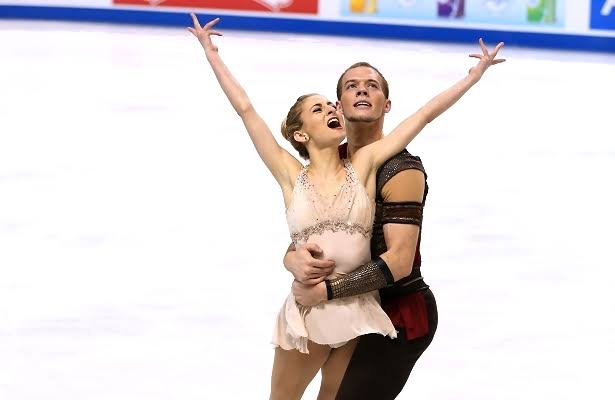
What makes pairs skating fascinating is the extraordinary degree of trust required between athletes. A singles skater can adjust independently during a difficult moment; a pair must respond together. That distinction gives the discipline an unusually human dimension.
For Kayne and O’Shea, this trust developed over years rather than weeks. Their partnership lasted from the early 2010s through December 2020, giving them one of the longer-running American pairs partnerships of their era. Their shared experience included victories, injuries, coaching changes and the constant pressure of competition.
As a result, their skating became more than an arrangement of technical elements. Their performances reflected accumulated familiarity. The small adjustments between partners, the anticipation before a lift and the ability to recover from mistakes all come from extensive shared experience.
The Final Seasons Together
By the end of the 2010s, Kayne and O’Shea were still competing at a high level. They won silver at the 2018 U.S. Championships and earned medals on the international circuit. At the 2019 Golden Spin of Zagreb, they achieved their listed personal-best total score of 194.29 under the scoring system then in use.
Their final competitive season included the 2020 U.S. Championships, where they won bronze, followed by international competition. At the 2020 Four Continents Championships in Seoul, they finished fifth, while they later placed fifth at Skate America in October 2020. These results showed that the pair remained serious competitors even as their long partnership approached its conclusion.
Then, in December 2020, the two announced that they were ending their partnership. U.S. Figure Skating reported that they had skated together since 2013 and that both intended to continue skating at that point.
What Happened After the Partnership?
The end of the partnership did not represent the end of either skater’s relationship with the sport. Kayne eventually moved into coaching and choreography. A 2025 episode of The Future of Figure Skating described her as a retired competitive pair skater working as a coach and choreographer, while also discussing lessons from her competitive career.
O’Shea’s career took another unexpected direction. After initially retiring from competitive skating, he returned briefly with Chelsea Liu before later moving into coaching and other professional activities. In 2022, he began skating with Ellie Kam, and the new partnership developed rapidly. By 2024, Kam and O’Shea had won the U.S. pairs title, and in 2026 they became Olympic champions in the team event.
That later success adds an intriguing dimension to the legacy of his earlier partnership. O’Shea’s eventual Olympic achievement does not diminish what he accomplished with Kayne. Instead, it demonstrates how an athlete’s career can contain several distinct chapters, each shaped by different partners, circumstances and goals.
Why Their Story Still Resonates
The lasting appeal of Tarah Kayne and Danny O’Shea comes from the fact that their career was not a straight line. They experienced breakthrough victories, injuries, changes in training and ultimately the difficult decision to end a partnership that had lasted for years. That complexity makes their story more compelling than a simple list of medals.
Their career also offers a useful perspective on the meaning of partnership in sport. Success requires individual talent, but it also requires compromise and mutual confidence. For spectators, a pairs program lasts only a few minutes. For the athletes, however, it represents years of learning how another person moves, reacts and performs under pressure.
In that sense, their legacy belongs not only to the record books but also to the broader culture of figure skating. Kayne and O’Shea helped demonstrate that successful pairs are built through patience, adaptation and shared responsibility. Their 2016 national title and 2018 Four Continents championship remain the clearest markers of their competitive achievement, while their long partnership remains the deeper story.
A Partnership Remembered Beyond the Medals
The story of Tarah Kayne and Danny O’Shea ultimately illustrates why sports history cannot always be reduced to podium finishes. Their medals matter, certainly, but so do the years of preparation, recovery and adaptation that made those achievements possible.
Kayne’s later work as a coach and choreographer and O’Shea’s continued career in pairs skating show two different ways an athlete can carry experience forward. Meanwhile, the partnership they created remains an important chapter in modern American pairs skating. It is remembered not simply because the two athletes won major competitions, but because they demonstrated what sustained trust and persistence can produce on the ice.
Their journey therefore stands as a portrait of competitive partnership itself: ambitious, demanding, occasionally uncertain and ultimately transformative. For anyone interested in the history and human side of figure skating, their career offers a reminder that the most meaningful sporting stories are often found between the medals.