






Samantha Winslow is a name that appears in Hollywood history in an unusually understated way. While her husband, composer John Williams, became one of the most recognizable figures in film music, Winslow largely remained outside the center of celebrity culture. Publicly available sources identify her as a photographer, and records also document her connection to Williams beginning in 1980.
Her story is therefore less about conventional celebrity and more about creativity, privacy, and the personal world surrounding one of cinema’s most influential composers.
A Creative Identity Beyond the Spotlight
Photography provides one of the clearest windows into Winslow’s professional identity. Classic FM identifies her as a photographer, while archival material from The Morgan Library & Museum preserves a photograph of John Williams credited to Samantha Winslow. The archival record is particularly interesting because it offers tangible evidence of her work rather than relying solely on celebrity biographies.
Moreover, an archived 1980 television-industry publication described her as a photographer and interior designer. That description suggests that her creative interests extended beyond the role of a famous composer’s spouse.
| Detail | Publicly documented information |
|---|---|
| Name | Samantha Winslow |
| Profession | Photographer; an archival source also describes her as an interior designer |
| Husband | Composer and conductor John Williams |
| Marriage | 1980 |
| Public profile | Relatively private |
| Documented creative work | Photography, including a portrait of John Williams |
Marriage to John Williams
The defining chapter of her public biography began in 1980, when she married John Williams. Classic FM confirms the marriage and identifies her as a photographer, while a contemporary Billboard notice records their June 1980 marriage in Boston.
By that point, Williams was already an established composer and conductor. His career would subsequently become associated with some of the most recognizable musical themes in modern cinema. Yet their relationship unfolded largely away from the kind of constant media attention that surrounds many celebrity marriages.
That distinction is important. Winslow’s public identity has generally been defined not by publicity campaigns or extensive interviews, but by occasional appearances alongside her husband and by the creative profession attributed to her.
Life Beside a Hollywood Music Legend
Being married to John Williams placed Winslow close to an extraordinary period in film history. Williams’ work includes landmark scores associated with films and franchises such as Jaws, Star Wars, E.T. the Extra-Terrestrial, Indiana Jones, Jurassic Park, and Schindler’s List. Biography.com notes his extensive awards record and describes the breadth of his career in film and concert music.
Consequently, Winslow has sometimes appeared in photographs connected with major Hollywood and cultural events. Getty Images’ editorial archive documents her attending events with Williams across several decades, including premieres, awards occasions, and celebrations of his career.
Still, appearing beside a famous spouse is different from building a public career around celebrity. In Winslow’s case, the available record points toward a quieter presence.
A Photographer in Her Own Right
The photography connection deserves particular attention because it gives the story a creative dimension of its own.
The Morgan Library & Museum catalogs a photograph of John Williams created by Samantha Winslow and specifically credits her as the photographer. The archival object was produced in Los Angeles during the 1980s and carries Williams’ personal inscription.
That small archival record is significant. It demonstrates that photography was not merely an incidental description attached to her name. Instead, there is documented evidence connecting her directly to photographic work.
At the same time, publicly available information about the full scope of her photographic career is limited. Rather than filling those gaps with speculation, it is more useful to recognize the distinction between what has been documented and what remains private.
The Mystery Around Her Early Life
One reason searches for Winslow often produce conflicting information is the scarcity of authoritative biographical material about her early years.
Reliable sources do not establish a widely accepted birth date or provide a detailed account of her childhood, education, parents, or early professional development. Some websites publish precise personal details, but those claims are not consistently supported by stronger sources.
Therefore, a responsible profile should resist the temptation to turn estimates into facts.
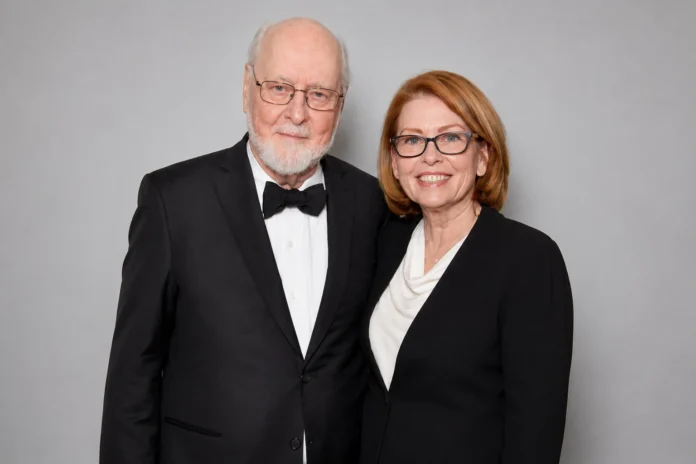
In an age when celebrity biographies often document almost every stage of a person’s life, the limited record surrounding Winslow is striking. Her story illustrates how a person can remain connected to one of the world’s most recognizable creative industries without making personal exposure the center of public identity.
Was She Also an Actress?
There is another interesting but less certain element in the public record.
IMDb lists a Samantha Winslow as being known for Medical Center and records her marriage to John Williams beginning in July 1980.
However, available sources do not provide enough detailed evidence to describe a substantial acting career. For that reason, it is more accurate to present the Medical Center connection as a documented database credit rather than portraying Winslow as a major television actress.
This distinction matters because names can easily become attached to repeated online claims. A careful biographical article should separate established information from details that remain difficult to independently verify.
The Family Chapter
Winslow also became part of a family that already had a long and complicated history.
Before marrying Winslow, John Williams had been married to actress and singer Barbara Ruick. They had three children, Jennifer, Mark, and Joseph, before Ruick’s death in 1974. Williams later married Winslow in 1980.
The family story adds context to Winslow’s place in Williams’ personal life. Her marriage began after a period of profound loss for the composer, and it continued alongside the extraordinary professional growth that followed.
Yet public sources provide relatively little detail about the family’s private routines. Again, that absence appears to be part of the story rather than something that needs to be filled with speculation.
A Different Kind of Celebrity Presence
Modern celebrity culture often rewards visibility. Social media encourages constant updates, personal photographs, interviews, and carefully managed public identities. Winslow’s public profile represents almost the opposite model.
Her name is recognizable primarily because of her relationship with an internationally celebrated artist, but the available record also shows a creative identity of her own.
Interestingly, archival photographs reinforce that understated presence. Getty’s records show Winslow accompanying Williams at significant cultural occasions, including the 2003 Walt Disney Concert Hall opening events, the 2012 Lincoln premiere, the 2017 Star Wars: The Last Jedi premiere, and the 2023 Academy Awards.
Rather than making her a conventional Hollywood personality, these appearances provide occasional glimpses into a long-running partnership.
Why Her Story Continues to Attract Interest
The continuing interest in Winslow reflects a broader fascination with the people who exist just outside the main frame of celebrity.
John Williams’ music has become part of the emotional language of modern cinema. His compositions can evoke adventure, wonder, suspense, nostalgia, and loss within seconds. Behind that enormous public legacy, however, exists an ordinary human world of relationships and personal connections.
Winslow’s story is compelling precisely because it does not offer the usual abundance of celebrity information. There is no extensive public autobiography, no constant stream of interviews, and no heavily documented personal brand.
Instead, there are fragments: a marriage record, photographic archives, event appearances, and a small number of biographical references.
The Value of Privacy in Celebrity Culture
There is also a wider cultural lesson in that limited visibility.
Privacy can be an active choice. A person does not necessarily need to transform every aspect of life into public content simply because a spouse is famous.
In Winslow’s case, the available evidence suggests a life connected to creative work and an extraordinary musical legacy while remaining comparatively distant from celebrity publicity. That balance may be increasingly unusual, but it also demonstrates that public recognition and personal visibility are not the same thing.
Ultimately, Samantha Winslow’s place in cultural history is best understood through that contrast. She is connected to one of Hollywood’s most celebrated composers, yet her own story remains remarkably restrained.
Conclusion
Samantha Winslow occupies an unusual position in the story of Hollywood: close enough to one of its greatest musical figures to appear in major cultural archives, yet private enough that many details of her own life remain undocumented.
What can be established is meaningful. She has been identified as a photographer, her work is represented in an archival collection, and she married John Williams in 1980.
Beyond those facts, caution is valuable. The gaps in her biography should not automatically be filled with assumptions. Instead, they can be understood as part of what makes her story distinctive.
In a culture increasingly fascinated with visibility, her relatively quiet public presence offers another perspective: sometimes the most interesting lives are not the ones lived constantly in front of the camera, but the ones that remain partially outside its frame.