







Introduction
Julie Dill and Hans Vestberg are two names associated with senior corporate leadership, yet their professional stories developed along notably different paths. Dill built a decades-long career across the energy, natural-gas, strategy, finance, communications, and corporate-governance worlds. Vestberg, meanwhile, established his reputation in international telecommunications, first through Ericsson and later through Verizon. Although the names sometimes appear together in online searches, available corporate and institutional biographies do not establish a direct personal or professional relationship between them. Their individual careers, however, offer an interesting look at two different forms of modern executive leadership.
Julie Dill’s Journey Through Energy and Corporate Leadership
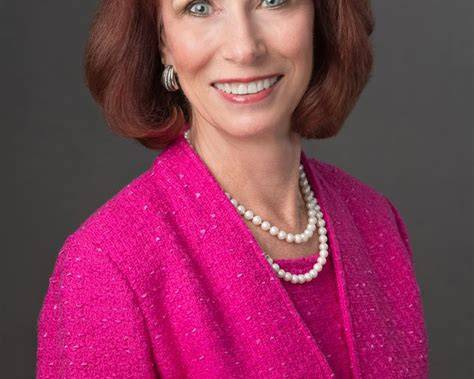
Julie A. Dill’s career reflects the broad range of responsibilities that can shape a senior executive. According to Sterling Infrastructure and the National Association of Corporate Directors, she accumulated more than four decades of experience in large public companies, including 36 years as an employee and executive. Her career included positions involving finance, operations, strategy, communications, and corporate management.
Her senior leadership roles included President of Union Gas Limited in Ontario and President and CEO of Spectra Energy Partners. Later, she served as Group Vice President of Strategy and then Chief Communications Officer at Spectra Energy. She remained with Spectra until its merger with Enbridge was completed in 2017.
This progression is significant because it shows how executive careers can evolve beyond a single specialty. Dill’s experience crossed financial decision-making, operational management, strategic planning, stakeholder communication, and governance. Consequently, her later transition into board leadership was supported by experience across several sides of corporate decision-making.
Julie Dill and the Evolution of Boardroom Leadership
Dill’s post-executive career has placed considerable emphasis on corporate boards. Southern Star Central Gas Pipeline announced her appointment to its board in 2019, and later company materials identified her as board chair. She has also served on the boards of organizations including Sterling Infrastructure and Rayonier Advanced Materials.
Boardroom work can look quieter than the highly visible role of a chief executive, but it carries a different kind of responsibility. Directors are expected to examine strategy, risk, governance, sustainability, financial performance, and long-term priorities. Dill’s background across energy and corporate operations therefore provides useful context for understanding why her career continued into governance after executive management.
Her story also reflects a wider change in corporate leadership: experienced executives increasingly bring knowledge from one stage of their careers into oversight roles where judgment, independence, and institutional memory matter.
Hans Vestberg’s Rise From Ericsson to Verizon
Hans Vestberg followed a distinctly international technology path. He joined Ericsson in 1991 and held management positions in several countries before becoming the company’s chief financial officer and eventually its president and CEO. Ericsson’s own historical account describes his international responsibilities and his leadership during a period when telecommunications networks were rapidly shifting toward IP-based services and new forms of connectivity.
Vestberg later moved to Verizon, joining the company in 2017 as chief technology officer and president of Global Networks. He became CEO in 2018 and chairman in 2019. Verizon’s current biography identifies him as a former chairman and CEO and says he now serves as a special advisor.
His career consequently illustrates another route to the top of a major corporation: deep technical and international experience followed by responsibility for a large consumer and enterprise communications business.
The Technology Story Behind Vestberg’s Leadership
Telecommunications leadership has changed dramatically during Vestberg’s career. The industry moved from traditional voice services toward mobile broadband, cloud computing, fiber networks, edge computing, and increasingly sophisticated digital infrastructure.
At Verizon, Vestberg became closely associated with the company’s 5G strategy. Verizon describes him as an architect of its 5G network strategy, while the World Economic Forum has similarly highlighted his role in the company’s connectivity and technology direction.
However, the significance of this work extends beyond one network generation. Telecommunications infrastructure increasingly affects education, commerce, entertainment, healthcare, remote work, and everyday communication. Therefore, executives in this sector operate at the intersection of technology and society, where infrastructure decisions can have consequences far beyond the company itself.
Julie Dill and Hans Vestberg: Different Industries, Similar Leadership Themes
The professional paths of these two executives are different, but there are still interesting themes to compare. Both careers demonstrate the importance of adaptability, international or cross-market experience, and the ability to move between specialized responsibilities and broader leadership.
| Executive | Professional background | Notable leadership areas | Corporate focus |
|---|---|---|---|
| Julie A. Dill | Energy, natural gas, corporate management | Strategy, operations, communications, governance | Energy infrastructure and corporate oversight |
| Hans Vestberg | Telecommunications and technology | Networks, technology, international management, executive leadership | Connectivity, digital infrastructure and technology |
The comparison should not be interpreted as evidence that the two executives worked together. Rather, it shows how different industries can produce different leadership journeys. Dill’s career developed around physical energy infrastructure and corporate governance, while Vestberg’s career developed around communications technology and digital networks.
Why Their Names May Appear Together Online
Search behavior can sometimes create associations between people that are not supported by primary sources. A search for two executive names does not, by itself, demonstrate that the individuals are colleagues, relatives, business partners, or spouses.
In this case, reliable biographies describe Dill and Vestberg separately. Dill’s documented professional world centers on energy companies and boards, while Vestberg’s centers on Ericsson, Verizon, telecommunications, and technology. The sources reviewed for this article do not establish a specific direct connection between them.
That distinction matters because online biography pages can sometimes merge similarly named people or create connections from search-engine indexing rather than documented relationships. Careful research therefore requires checking company biographies, board records, regulatory documents, and institutional sources rather than relying solely on search snippets.
A Closer Look at Julie Dill’s Corporate Perspective
Dill’s career is particularly interesting because communication was only one component of her professional identity. Although she became Chief Communications Officer at Spectra Energy, her earlier positions included strategy, finance, operations, and executive management.
That breadth offers a useful perspective on modern corporate leadership. Executives who understand both operational realities and stakeholder communication can approach major organizational changes from multiple angles. Moreover, energy companies operate within complicated environments involving infrastructure, regulation, communities, investors, employees, and long-term capital commitments.
Her later governance work continues that pattern. Southern Star’s sustainability reporting has included a Q&A with Dill in her role as board chair, discussing governance and sustainability oversight.
Vestberg and the Changing Meaning of Connectivity
Vestberg’s career reflects a similarly broad transformation, although in a very different industry. Telecommunications was once primarily associated with telephone networks. Today, connectivity supports cloud services, streaming, business systems, smart devices, artificial intelligence applications, and increasingly interconnected infrastructure.
During his Verizon leadership, 5G became a central part of the company’s technology strategy. His background at Ericsson also gave him experience with international telecommunications markets before he entered the American corporate environment.
His career therefore illustrates how an executive can move from technical infrastructure toward a much broader conversation about how technology shapes everyday life.
The Human Side of Executive Careers
Corporate biographies often reduce people to job titles, companies, and dates. Yet the deeper story is usually about adaptation. Dill moved across finance, operations, strategy, communications, executive management, and board governance. Vestberg moved through international telecommunications roles before taking responsibility for one of the world’s major communications companies.
Neither journey fits neatly into a single professional label. Instead, both demonstrate how long careers can accumulate different forms of expertise. Furthermore, their stories show that leadership in large organizations is rarely defined by one skill alone.
For readers researching these names, this distinction is especially valuable. Understanding the individual careers provides a clearer picture than assuming that two names appearing together must represent a shared biography.
What the Public Record Actually Shows
The available record provides substantial information about both executives, but it also has clear boundaries. Julie Dill’s corporate biographies document her energy-sector career and board activities. Hans Vestberg’s biographies document his telecommunications career and leadership at Ericsson and Verizon.
What those sources do not establish is an identifiable partnership between the two. There is no basis in the sources reviewed here to present them as spouses, relatives, business partners, or former colleagues.
That restraint is more than a technical detail. In an era when online searches can rapidly transform speculation into apparent fact, distinguishing documented information from assumption is an essential part of responsible biography writing.
Frequently Asked Questions
Who is Julie A. Dill?
Julie A. Dill is an experienced American corporate executive and director whose career has focused heavily on the energy and natural-gas industries. She held senior positions at Spectra Energy and Union Gas and has subsequently served on several corporate boards.
Who is Hans Vestberg?
Hans Vestberg is a Swedish business executive with a long career in telecommunications. He spent many years at Ericsson before joining Verizon, where he became CEO in 2018 and chairman in 2019. Verizon now identifies him as a former chairman and CEO and special advisor.
Are Julie Dill and Hans Vestberg professionally connected?
The reliable sources reviewed for this article do not establish a direct professional relationship between them. Their documented careers developed primarily in different industries.
What industries are associated with Julie Dill?
Dill’s professional background is strongly associated with energy, natural gas, power, corporate strategy, communications, and governance.
What is Hans Vestberg known for?
Vestberg is particularly known for his leadership roles at Ericsson and Verizon and for his involvement in telecommunications, network technology, connectivity, and 5G strategy.
Conclusion
Julie Dill and Hans Vestberg represent two distinct versions of modern corporate leadership. Dill’s career traces a path through energy, strategy, operations, communications, and board governance, while Vestberg’s career follows the evolution of international telecommunications from traditional network infrastructure toward 5G and broader digital connectivity.
Although searches may place their names side by side, the documented record does not establish a direct relationship between them. Instead, their separate careers offer a more useful story: leadership can emerge from very different industries, experiences, and responsibilities. Ultimately, the contrast between their professional worlds demonstrates how corporate leadership is shaped not only by individual achievement, but also by the changing infrastructure and priorities of the industries in which leaders work.