








BFFR Meaning in Today’s Digital Language
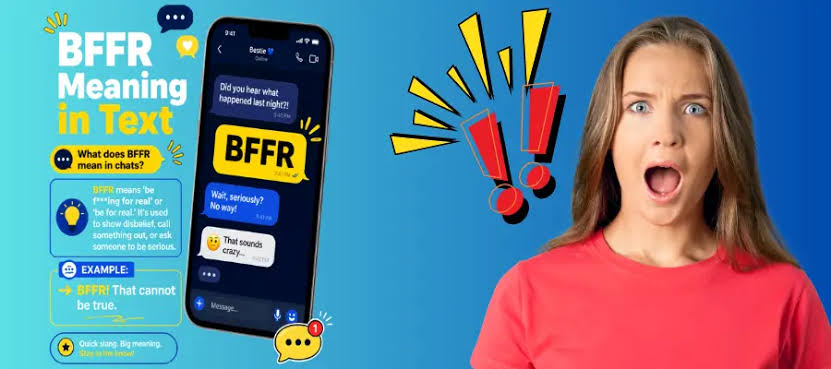
BFFR meaning has become increasingly recognizable across social media, group chats, comments, and casual online conversations. The abbreviation generally stands for “be fucking for real,” a blunt expression used when someone wants another person to stop joking, exaggerating, pretending, or making an unrealistic statement. Although the phrase contains profanity, it is often used casually among friends and online communities. More importantly, its popularity shows how internet language can compress an entire emotional reaction into just four letters while still communicating humor, disbelief, irritation, or emphasis.
Why BFFR Became So Common Online
The popularity of BFFR is closely connected to the way people communicate on fast-moving platforms. Social media favors short expressions that can be understood almost instantly, and abbreviations fit naturally into that environment. Instead of writing a complete sentence expressing disbelief, a person can use four letters to communicate an immediate reaction.
Furthermore, the phrase has become part of a wider culture of conversational internet slang. Terms such as “FR,” “IMO,” “IDK,” and “LOL” have already demonstrated how digital communities reshape everyday English. BFFR follows the same pattern, but with a stronger emotional tone. Depending on the situation, it can sound playful between friends or confrontational when directed at someone during an argument.
What Does BFFR Actually Express?
The literal expansion explains the words, but the meaning depends heavily on context. Someone might use BFFR after hearing an obviously exaggerated claim, while another person might use it humorously when a friend says something unrealistic.
In many conversations, the expression is not intended as a serious insult. Instead, it can function almost like a dramatic reaction. For example, if a friend says they will become a millionaire by next weekend without any plan, someone might respond with BFFR to signal disbelief. Similarly, a social-media user might comment it under an exaggerated post simply to say, in effect, “Come on, seriously?”
| Online expression | General purpose | Typical tone |
|---|---|---|
| BFFR | Challenges an unrealistic or unbelievable statement | Blunt, humorous, skeptical |
| FR | Shows agreement or emphasizes sincerity | Casual, supportive |
| LOL | Signals amusement or lightens a statement | Humorous, relaxed |
| IDK | Indicates uncertainty or lack of knowledge | Casual, neutral |
The important distinction is that BFFR carries more emotional force than many ordinary abbreviations. It can challenge what another person has said rather than simply responding to it.
The Cultural Appeal of Short, Strong Expressions
Digital communication has changed not only how quickly people speak but also how they express personality. A short abbreviation can now carry tone, attitude, humor, and social context simultaneously. That is one reason expressions such as BFFR can spread rapidly through online communities.
Moreover, internet slang often develops because users want language that feels immediate and authentic. Formal wording can sometimes appear distant in a casual conversation, whereas an abbreviation can make a response feel spontaneous. BFFR fits particularly well into this environment because it sounds conversational even when written entirely in capital letters.
There is also an element of performance. Online conversations frequently involve exaggerated reactions, memes, screenshots, and humorous commentary. A compact phrase that communicates disbelief can become useful far beyond its original literal meaning.
How BFFR Is Used in Everyday Conversations
Understanding BFFR meaning becomes easier when looking at the situations in which people use it. Usually, the expression appears when someone thinks another person’s statement is difficult to believe, unnecessarily dramatic, or detached from reality.
For example, a friend might announce, “I am going to finish this entire project in ten minutes.” A playful response could be “BFFR.” In another situation, someone might make an obviously exaggerated claim on social media, and commenters could use the abbreviation to express skepticism.
However, tone matters. Among close friends, the phrase can be affectionate teasing. Between strangers, coworkers, or people already in disagreement, it may sound dismissive or rude. Therefore, understanding the relationship between the speakers is just as important as understanding the abbreviation itself.
The Difference Between Humor and Confrontation
One interesting feature of internet slang is that the same expression can produce completely different emotional effects. BFFR may be funny in one conversation and offensive in another.
For instance, a friend laughing at an exaggerated story may use it as playful disbelief. On the other hand, someone involved in a serious disagreement could interpret the same phrase as an aggressive dismissal. The profanity contributes to that intensity, even when the speaker does not intend genuine hostility.
Consequently, people should consider audience and context before using it. Slang works best when everyone involved understands the cultural and emotional meaning behind it. Without that shared understanding, a short abbreviation can easily create unnecessary tension.
BFFR and the Evolution of Internet Slang
The rise of BFFR illustrates a broader transformation in modern English. Language has always changed, but digital communication accelerates the process. New expressions can move from small online communities into mainstream conversations within a surprisingly short period.
Social platforms also allow slang to cross geographical and cultural boundaries. A phrase created or popularized within one online community can quickly become recognizable to millions of users elsewhere. As a result, internet English is increasingly shaped by memes, video captions, comment sections, messaging apps, and youth culture.
At the same time, these expressions rarely remain fixed. Their meanings can soften, become ironic, or develop new uses. BFFR can therefore be understood not simply as an abbreviation but as part of a constantly changing digital vocabulary.
When Using the Expression Makes Sense
The expression is generally most appropriate in informal communication. Friends, social-media users, and members of online communities may use it naturally when joking or reacting to something unbelievable.
However, it is usually unsuitable for formal emails, academic writing, professional reports, or respectful official communication. Even when the recipient understands the abbreviation, the profanity can make the message appear unnecessarily confrontational.
A useful rule is simple: consider whether you would comfortably say the expanded phrase aloud to the person in the same situation. If the answer is no, another expression may communicate the same idea more appropriately.
Why Internet Slang Matters Beyond the Acronyms
At first glance, an abbreviation such as BFFR may seem insignificant. Yet these expressions reveal something meaningful about contemporary communication. People are constantly searching for faster ways to communicate complicated reactions, and digital slang provides precisely that.
The expression also demonstrates how tone has become increasingly important in written online communication. Without facial expressions or vocal cues, users rely on abbreviations, punctuation, capitalization, emojis, and memes to communicate emotional intent. In that sense, slang becomes part of the visual and cultural language of the internet.
Ultimately, the popularity of these expressions reflects a simple reality: language changes when people’s communication habits change. Social media did not eliminate traditional English; instead, it added another layer to it.
Common Questions About BFFR
Is BFFR a rude expression?
It can be. Because the expanded phrase contains profanity, it may sound blunt or disrespectful, particularly in professional or unfamiliar settings. Among friends, however, it can function as humorous teasing.
What does BFFR mean on social media?
On social media, it is commonly used to express disbelief, skepticism, or a reaction to something considered unrealistic or exaggerated. Its precise tone depends on the surrounding conversation.
Can BFFR be used jokingly?
Yes. Friends frequently use it as playful exaggeration rather than genuine anger. Context, relationship, and delivery determine whether the expression feels humorous or confrontational.
Is BFFR appropriate in professional communication?
Generally, it is better avoided in professional communication. Formal settings usually require clearer and more neutral language, especially when communicating with clients, managers, teachers, or unfamiliar colleagues.
Conclusion: More Than Four Letters
BFFR meaning is ultimately about more than the expansion of an internet abbreviation. It represents the way modern digital communication transforms emotion into compact language. With only a few letters, users can communicate disbelief, humor, skepticism, or playful frustration almost instantly.
More broadly, its popularity demonstrates how online communities continue to influence everyday English. As communication becomes faster and increasingly informal, new expressions will continue to emerge, evolve, and sometimes move beyond the internet into ordinary conversation. BFFR is one small example of that much larger linguistic transformation.